
Why the Tag on Your Valentino Bag Reads Garavani
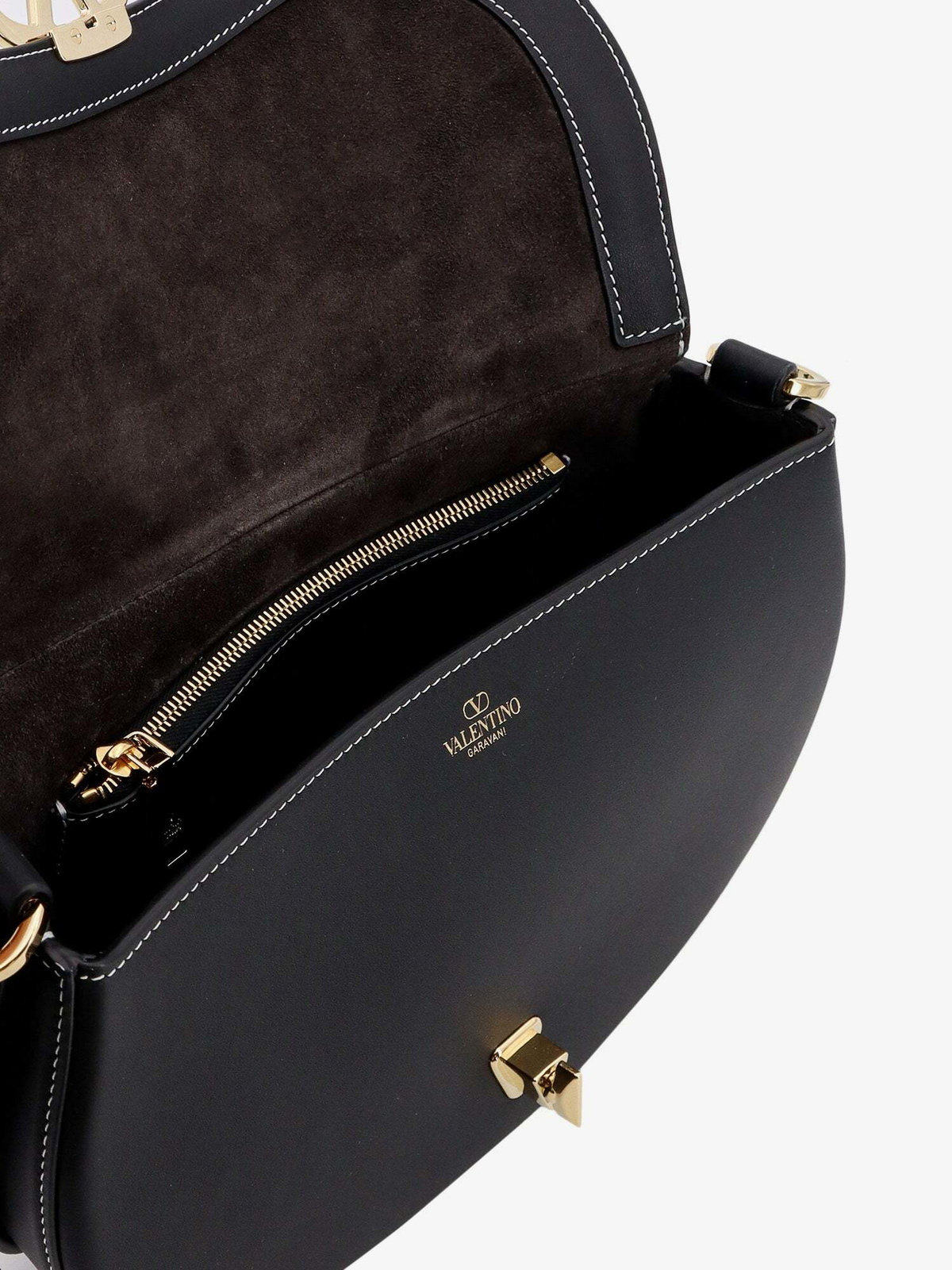
Turn a Valentino bag inside out and the tag gives you two words where you might have expected one: VALENTINO and GARAVANI, in capitals, above MADE IN ITALY. Most shoppers read that second word as a flourish, a founder’s signature added for prestige, or a sign that they have bought some particular sub-line. None of that is right. GARAVANI is on the bag because a contract signed in 1979 requires it to be there, and the same requirement is why the word appears throughout the advertising for the house’s leather goods. Understanding the reason turns a piece of trivia into the single most useful check a buyer can make. This piece covers where the word comes from, what it guarantees, and what it does not.
The answer in one sentence
Overlapping rights to the word Valentino on handbags in the United States belong to another company, and the Roman couture house agreed decades ago to add its founder’s surname to stay distinguishable. The other company is Mario Valentino S.p.A., a leather goods and footwear business founded in Naples in 1952, with no connection to the couture house founded in Rome in 1960. By its own account, Mario Valentino has held the American trademark Valentino for handbags and leather goods since 26 April 1971, and that senior-rights position is corroborated in legal reporting. A coexistence agreement in 1979 split the marks between the two businesses, and one of its terms obliges Valentino S.p.A. to use GARAVANI alongside VALENTINO on leather goods and in the advertising for them. So the word on your bag is a legal obligation carried out in stamped capitals. Everything else here is detail built on that one fact.
The man who gave the surname
The house was founded in Rome in 1960 by Valentino Garavani together with Giancarlo Giammetti, with the first atelier opening on Via Condotti. Close to five decades of designing under his own name ended with his retirement from design in 2007 crossbody bags and a final couture collection in January 2008. He had already sold the company in 1998, which means that by the time he stepped back he no longer owned the business carrying his name. He died on 19 January 2026, aged 93. None of the bags in the current collection were designed by him, and neither was anything made in the past two decades. The tag’s surname records the founder of the house and tells you nothing about who works there today.
The 1979 agreement, and the case that tested it
The two companies settled their overlap privately rather than in court, and the coexistence agreement they signed in 1979 remains the governing document. Both directions are covered: each business gets a defined set of permissions and a defined set of limits. An American court tested the arrangement decades later, after Valentino S.p.A. filed suit against Mario Valentino in July 2019 in the Central District of California, docketed 2:19-cv-6306, alleging false advertising, unfair competition and breach of the coexistence agreement. The counterclaims from Mario Valentino were dismissed in April 2021, and settlement followed with a dismissal without prejudice on 14 June 2024, terms never disclosed. Because it ended without prejudice either side may bring the matter back, and reporting indicates further proceedings, including arbitrations, remained live in Italy. No wrongdoing was established against either company and none is suggested here; this is a trademark boundary between two legitimate businesses.
What the Naples company may do
Under the agreement, Mario Valentino may trade under several forms of the name. The exterior of its products may carry Mario Valentino, M. Valentino, Valentino, MV or V. A condition comes with that: the full name Mario Valentino must appear inside the item and on its packaging, so the maker stays identifiable to anyone who opens the bag. Combining V and Valentino together on leather goods is not permitted. Its products are genuine goods from a genuine Italian house, sold at a different price point and through channels other than the couture house uses. Company claims about inventing the stiletto heel and the women’s moccasin amount to self-description rather than independently verified history, and are best treated as such.
What the Roman house has to do
The reverse obligation is narrower and a great deal more visible. Valentino S.p.A. presents the mark as VALENTINO GARAVANI rather than VALENTINO alone on leather goods and in advertising for leather goods. That is why the accessories line is named the way it is, why the interior tag carries both words, and why the house’s own product pages for bags use the longer form consistently. Not every category is reached identically by the requirement, which is why ready-to-wear can be presented as Valentino or Maison Valentino. For a buyer the effect is simple: the longer name on a bag is the expected, compliant form, and its absence on something sold as couture-house merchandise deserves a second look. It is a boring, contractual rule, and an enormously useful one.
One company, two names
People commonly misread Valentino Garavani as a sub-brand, a diffusion line or a lower tier within the same company. That is wrong. Valentino Garavani is the naming convention used for accessories, while Valentino and Maison Valentino are used for ready-to-wear, and all of it comes from one company applying one set of standards. A Rockstud crossbody bag and a couture gown are equally the work of the same house; only the wording on the label differs, for the contractual reason set out above. Creative direction moved from Pierpaolo Piccioli to Alessandro Michele, in charge of the house since 2024 according to the most recent confirmable reporting. Mayhoola for Investments holds seventy per cent and Kering thirty per cent, the latter acquired in July 2023 with a stated intention to take full ownership by 2028. The accessories carrying the longer name were observed in 2026 at market prices from about $650 for a VLogo Signature clutch to $7,900 for an embroidered Panthea, all made in Italy, and Rebag’s data puts average resale retention for the house near 41 per cent, with hero styles between 50 and 58 per cent.
What the word guarantees, and what it does not
GARAVANI on a tag tells you which company made the bag. It does not by itself prove the bag is authentic, because counterfeiters copy tags as readily as they copy studs. Physical checks are the ones that matter: capitals in a consistent font weight, evenly pressed stamping without smudging, a tag sewn down on all four sides, engraved rather than printed hardware logos, square zip pulls with rounded edges and deep engraving, uniform pyramid studs at even spacing, and stitching of consistent density. Usually a serial number sits on a tag inside an interior pocket, often black, cream or light brown; not every bag has one, older pieces frequently do not, and a missing serial proves nothing on its own. There is no date-code system on these bags at all, so any guide claiming to decode a production date from the digits is inventing it. Reports describe authenticity cards listing the model specification, the serial and Made in Italy, with the serial matching the interior tag, but that comes from resale and authentication practice rather than an official brand statement, and pre-owned bags frequently arrive without one.
| What the bag shows you | What it tells you |
|---|---|
| VALENTINO and GARAVANI on the interior tag | Made by the Roman couture house, as its 1979 obligation requires |
| Valentino outside with Mario Valentino inside or on the packaging | A genuine bag from the separate Naples company |
| No serial number on the interior tag | Possible on older pieces and not proof of a fake by itself |
| Anything presented as a date code | No such system exists for these bags |
| A pre-owned bag arriving without an authenticity card | Ordinary, because cards are often lost or never passed on |
Reading the listing before you buy
Most mistakes happen in the description rather than in the bag. A resale listing headed simply Valentino bag carries no information about which company made it, and sellers abbreviate constantly, sometimes without realising there is anything to abbreviate. Request a clear photograph of the interior tag before you agree a price, then believe what the tag says over what the title says. For new stock, the house’s own boutiques and webstore or named authorised retailers such as Neiman Marcus, Bergdorf Goodman, Saks Fifth Avenue, Nordstrom, Mytheresa, Farfetch, Selfridges or Harrods are where the question never arises. If you are browsing a Valentino bag sale at an American off-price chain, expect Valentino by Mario Valentino, because that is what those chains’ own brand filters list. A single word on a tag settles the whole question, which is precisely why it pays to know how the word got there.